

The Production Line Method: How Collaborative Art Projects Teach Kids Real-World Creative Skills
Creative Pathways teaches elementary students to make community-wide art projects using a "production line" model, where each student completes one step of a larger piece, rather than starting and finishing their own individual work, mirroring how professional artist studios actually operate.
Rethinking What "Finishing Your Own Art" Means
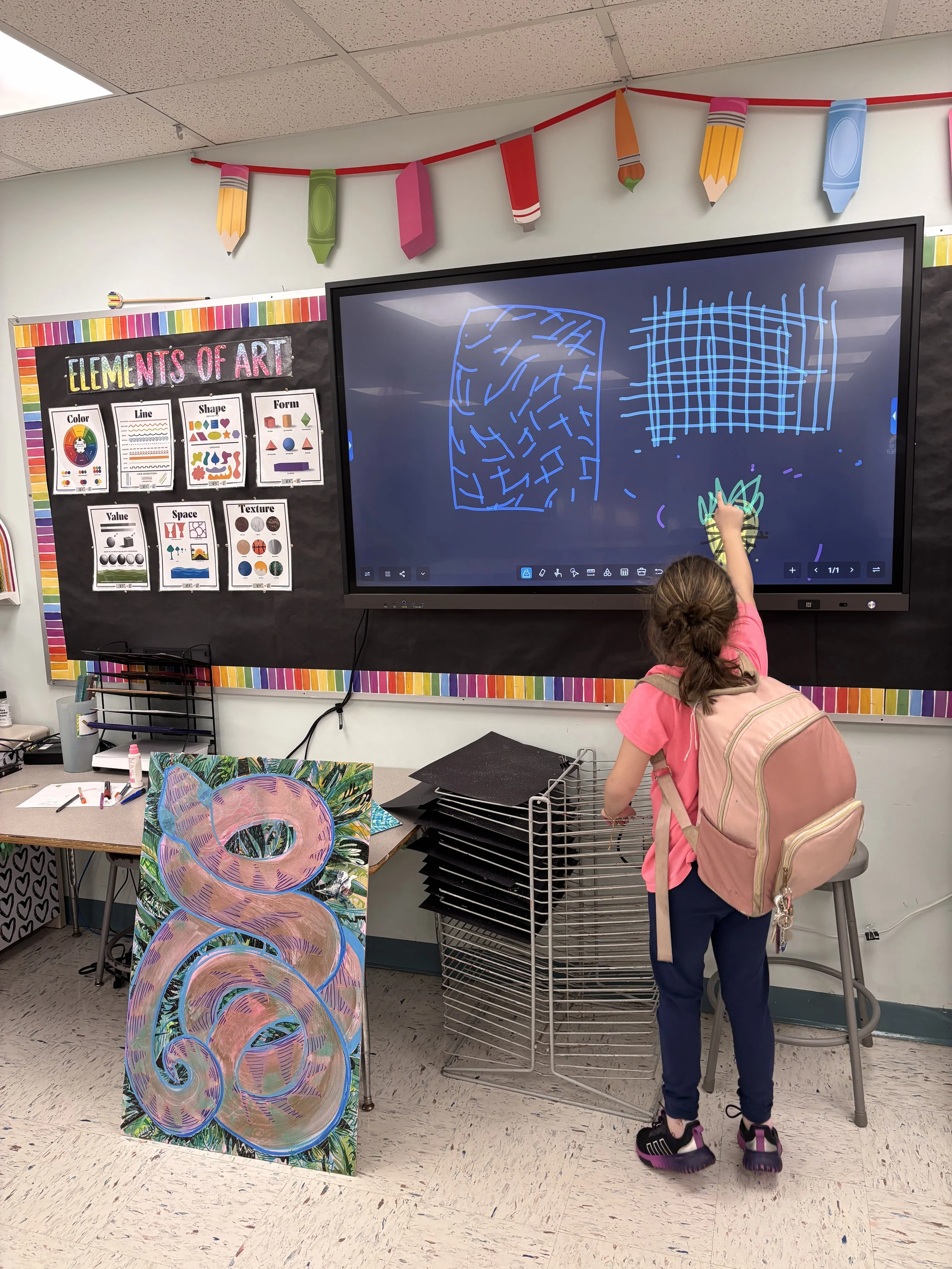
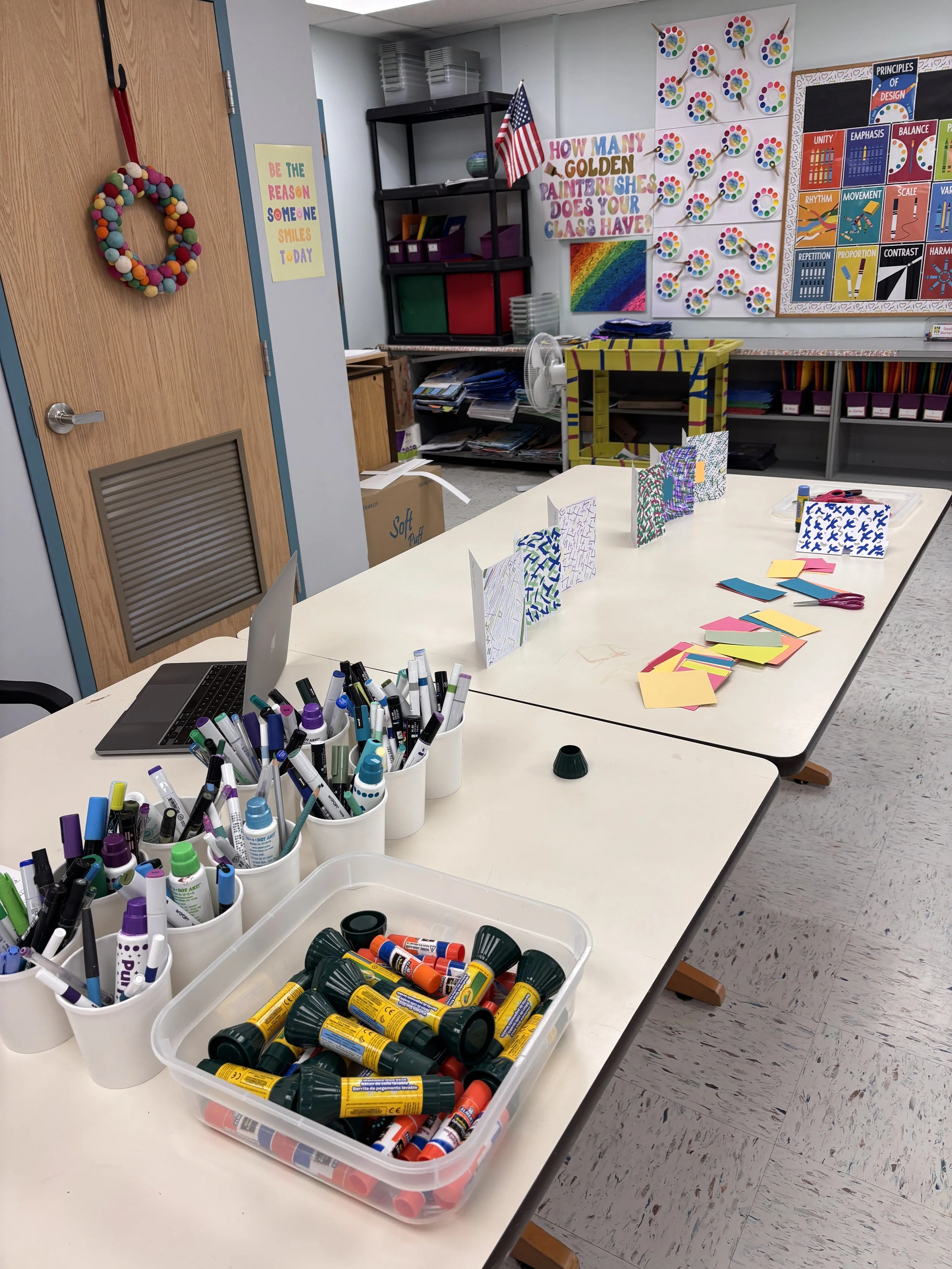
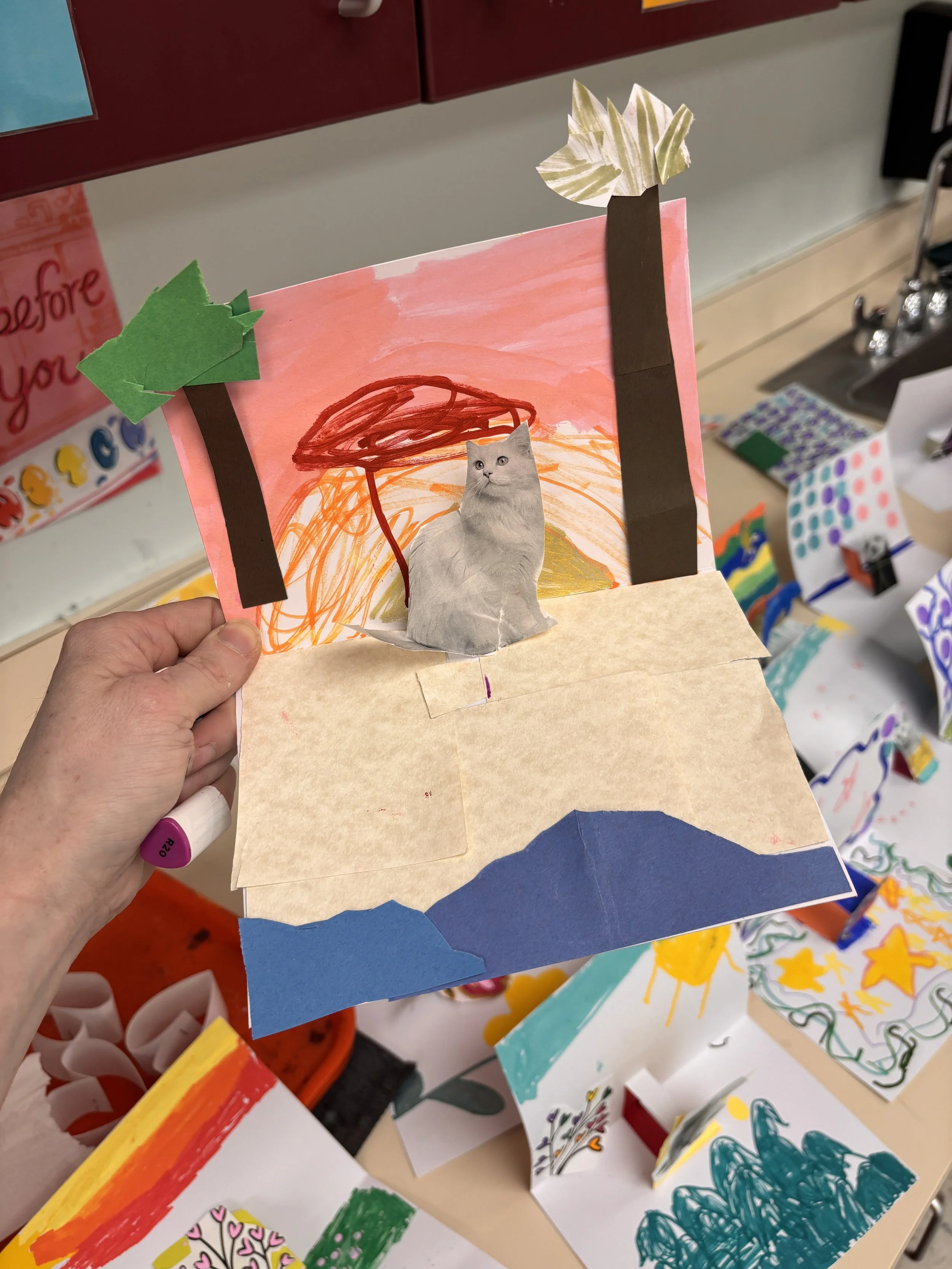
Most classroom art projects follow a familiar pattern: a student starts a piece, works on it themselves, and takes it home when it's done. Creative Pathways' "Greetings from Duval Elementary" program flips that model. Every student contributed to a shared pool of roughly 500 greeting cards, working on different stages from drawing a fabric texture to adding a pop-up element to writing a message, knowing that someone else might complete the card they started, and that they'd help finish cards other classmates began.
For elementary-aged students, this is a genuinely new concept, and one worth naming explicitly in the classroom. Framing the work in clear steps, for instance, "today we're all working on step one," "next time, we'll work on step two,” helps students understand their contribution to a larger, shared outcome rather than feeling like their individual project was taken away from them.
Why a Production Line Model Reflects Real Creative Careers
This is a classroom management technique that is a direct reflection of how many professional artists actually work. Large-scale glass sculpture studios, professional pottery production runs, and mural or painting studios with hired assistants all rely on collaborative, multi-step production processes where one lead artist directs a team through different phases of the work.
By introducing this concept early, arts educators give students a more accurate and more expansive picture of what a creative career can look like. It's not just "solo artist alone in a studio." It's teamwork, delegation, specialization, and shared craftsmanship, all skills that translate well beyond the art room.
Teaching Technique and Vocabulary Through a Community Theme
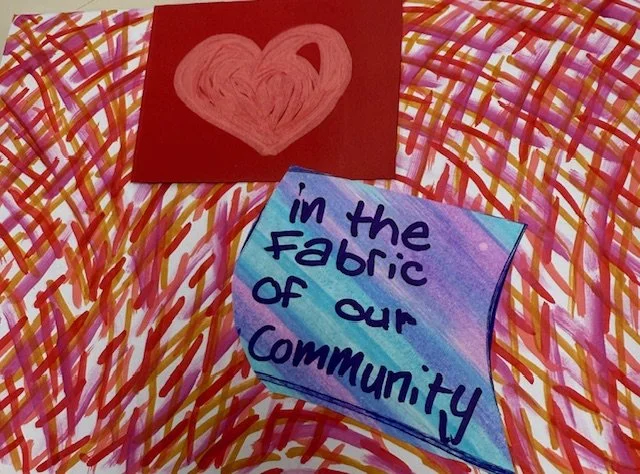
The program's central theme, "In the fabric of our community, you are an important thread,” gave the collaborative structure a visual and conceptual anchor. Students learned to observe real fabric samples at their tables, identifying the warp and weft (the vertical and horizontal threads that form woven fabric), and translated that observation into a hand-drawn faux-woven pattern using curved, dashed lines.
This kind of technique-plus-vocabulary approach does double duty: students pick up a transferable drawing skill (a woven texture they can use in future artwork, from clothing on a figure drawing to a silly way to depict an animal's fur) while also engaging with new academic vocabulary and a metaphor about individual value within a community.
Using Artist Mistakes as a Teaching Moment
One of the more resonant classroom moments in this program came when the visiting artist pointed out an accidental paint drip on one of her own in-progress paintings, displayed in the classroom for students to see evolve over several weeks. Rather than hiding the mistake, she opened it up as a discussion: how might you fix a mistake like this? Cover it with collage? Add more drips to make it look intentional? Leave it and move forward?
This is a small but powerful example of modeling resilience in creative work. Professional artists don't stop making mistakes; they simply have more practice responding to them. Letting students see a working artist's real, unfinished pieces (rather than only polished final work) normalizes the messy, iterative nature of the creative process.
A fun side anecdote here is that months later after completion, this same piece was submitted to a show at the Frame Center in Hanover, MA and won the award for Best in Show out of 110 other pieces of art.
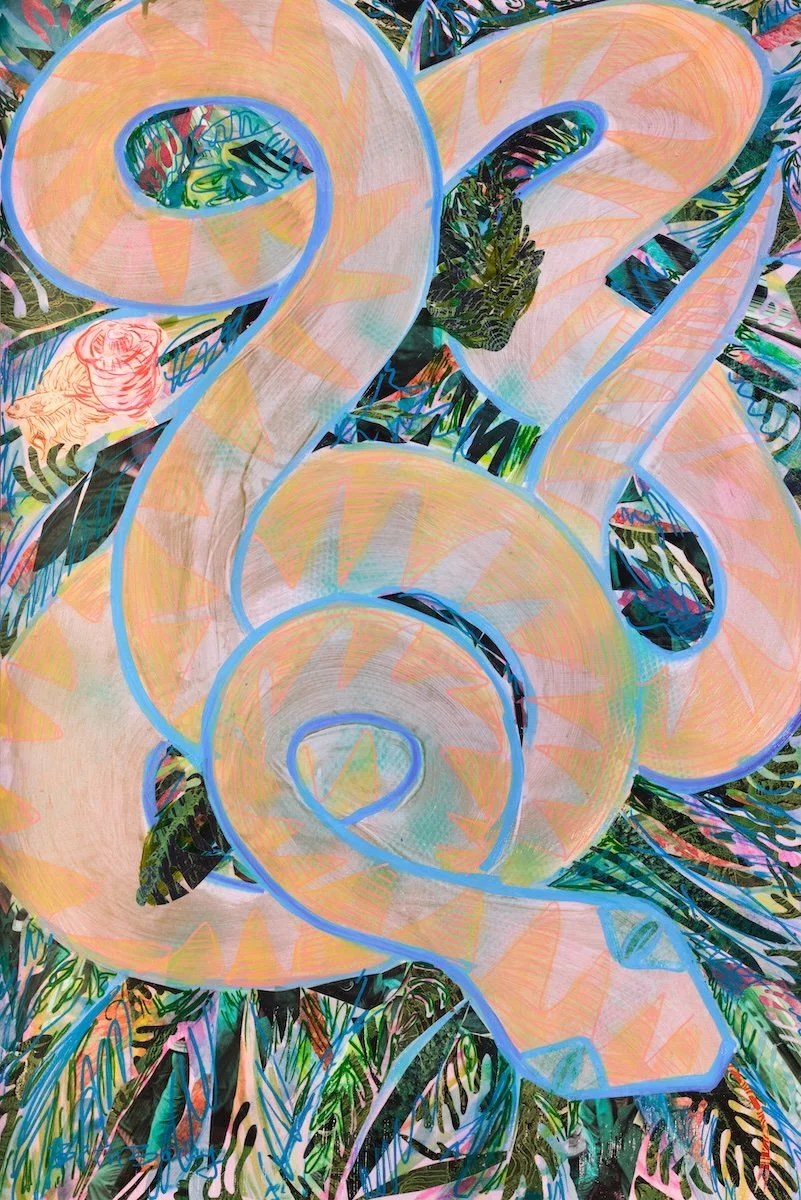
Beth Bailey
“Canopy Dreaming: Part One” 2026
Mixed Media and Acrylic on Wood Panel
36×24”
Won Best in Show for the Hanover Days exhibition at Frame Center in the Summer of 2026
Bringing Local Working Artists Into the Classroom
The program also intentionally brought in paid visiting artists to work alongside students for full school days, each representing a unique creative career path. Through these interactions, students discovered new dimensions to the educators they see every day. They learned that their art teacher, Alison Brown, had previously worked as an interior designer, a background she had never spoken about at length with her students before. They also worked closely with the program founder, a ceramic artist turned painter turned nonprofit arts educator.
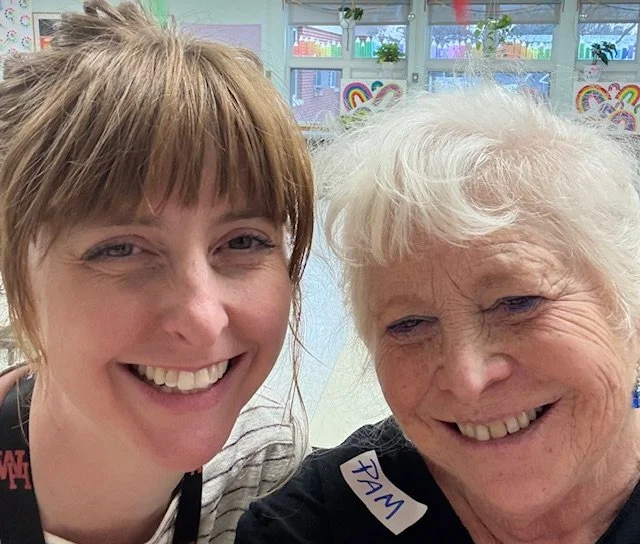
Other local creatives joined the classrooms and shared their own art and career stories, culminating in a festive Family Night event. The visiting lineup included Julia Driscoll, a mixed media artist and the director of the North River Arts Society, as well as Jess Hassett, a watercolor artist, chef, fashion designer, and the co-owner of Levitate in Marshfield. Students also met Pam Golden, a ceramic artist who recently retired after teaching art for many years, Lindsey Boss, a collage artist who works as a Trader Joes sign painter, and Michelle Levesque, a dentist turned painter who creates sculptures and giant puppets.
This directly reinforces one of Creative Pathways' core values: that there isn't one single path into a creative life, and that those pathways often exist much closer to home than students or their parents might assume. Rather than only presenting "big city" art careers, students see working artists earning a living within their own community.
Turning Classroom Work Into Community Connection
Because the finished cards were designed to be sent to local community helpers like town hall staff, first responders, small business owners, and assisted living residents, the project extended beyond the classroom walls. Students weren't just practicing an art technique; they were creating something meant to be given away, reinforcing the idea that creative work can be a form of genuine community contribution.
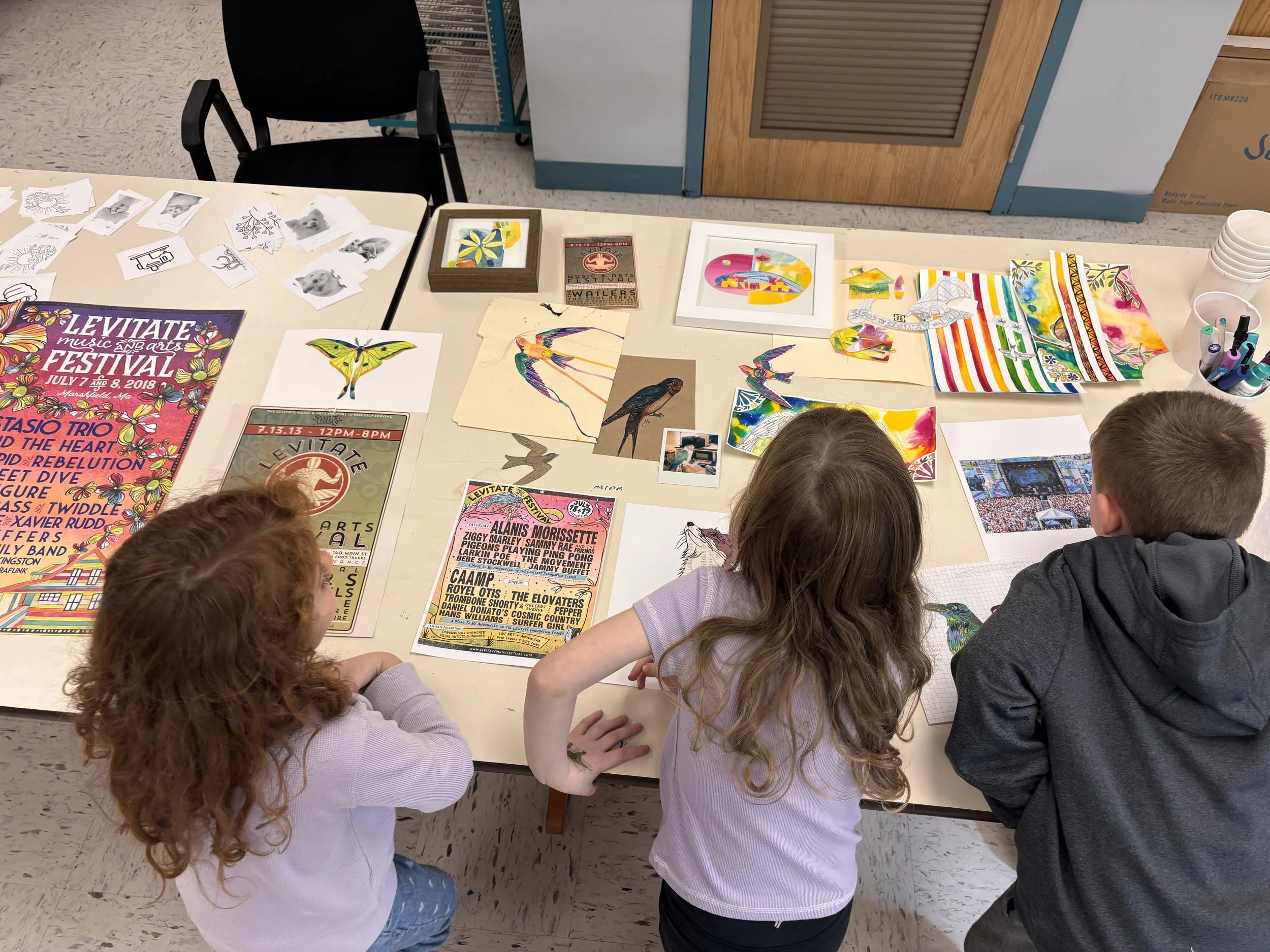
Students getting a close up look at the work by artist Jess Hassett
Frequently Asked Questions
What is a "production line" model in art education? It's a collaborative teaching approach where students each complete one stage of a larger art piece rather than a single piece from start to finish, mirroring how professional artist studios often produce large-scale or bulk work.
Why is it valuable to show students an artist's mistakes? Seeing a professional artist navigate an in-progress mistake helps normalize the iterative, imperfect nature of creative work and models resilience and problem-solving.
How does this teaching method connect to career exposure for students? By bringing in multiple paid local artists with varied career path, from interior design to ceramics to sign painting, students see a range of realistic, local creative career possibilities.
Creative Pathways brings collaborative, community-centered art programming to schools across Massachusetts' South Shore. To learn more about bringing a residency like this to your school, send an email to beth@creativepathwaysproject.com.
