

How Visual Teaching Breaks Down Language Barriers in Community Art
Quick answer: Creative Pathways teaches art through visual demonstration instead of verbal instruction. By setting up materials that invite action and modeling techniques imperfectly rather than explaining them, the studio removes two of the biggest obstacles to community art participation: intimidation and language.
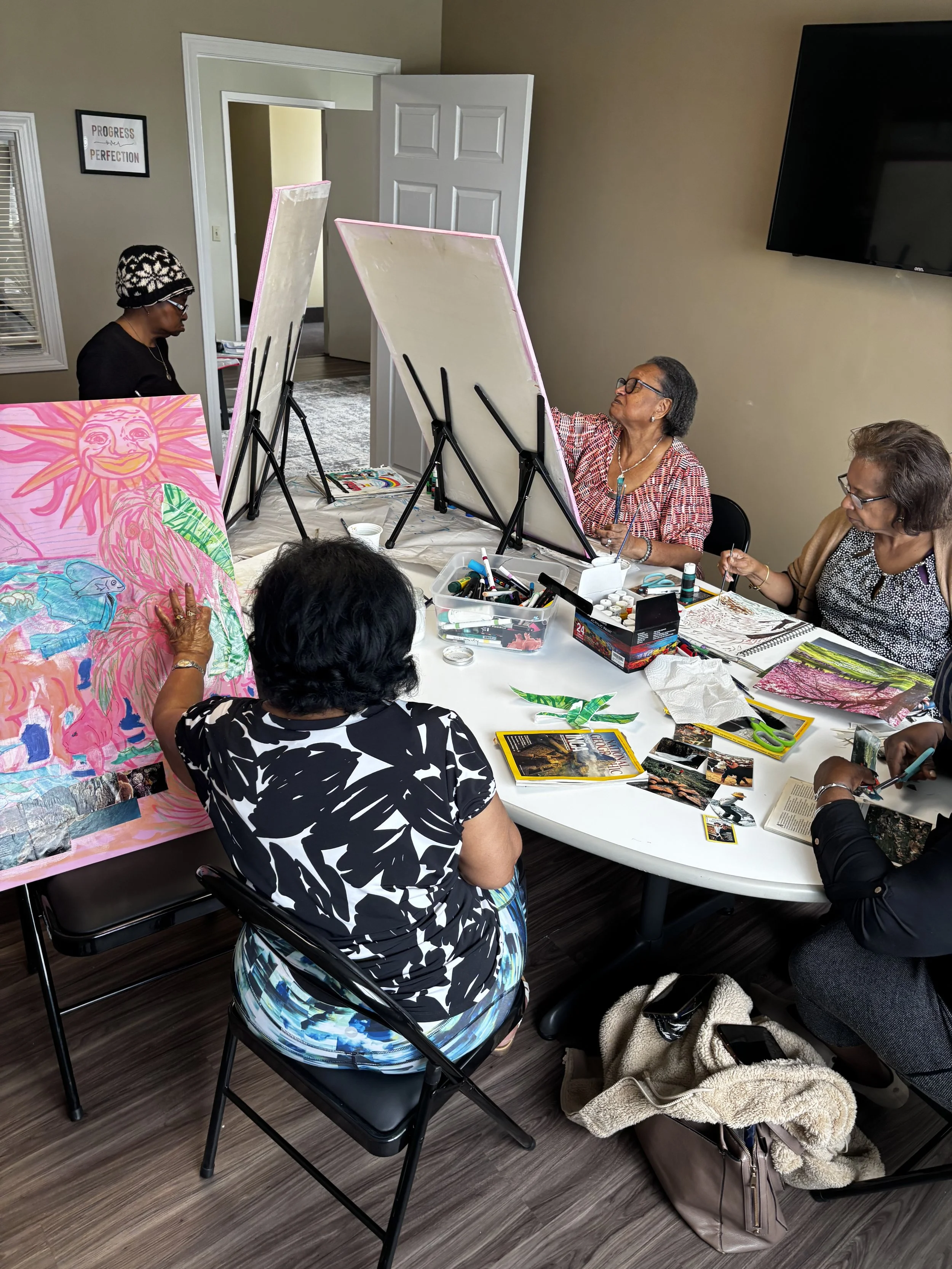
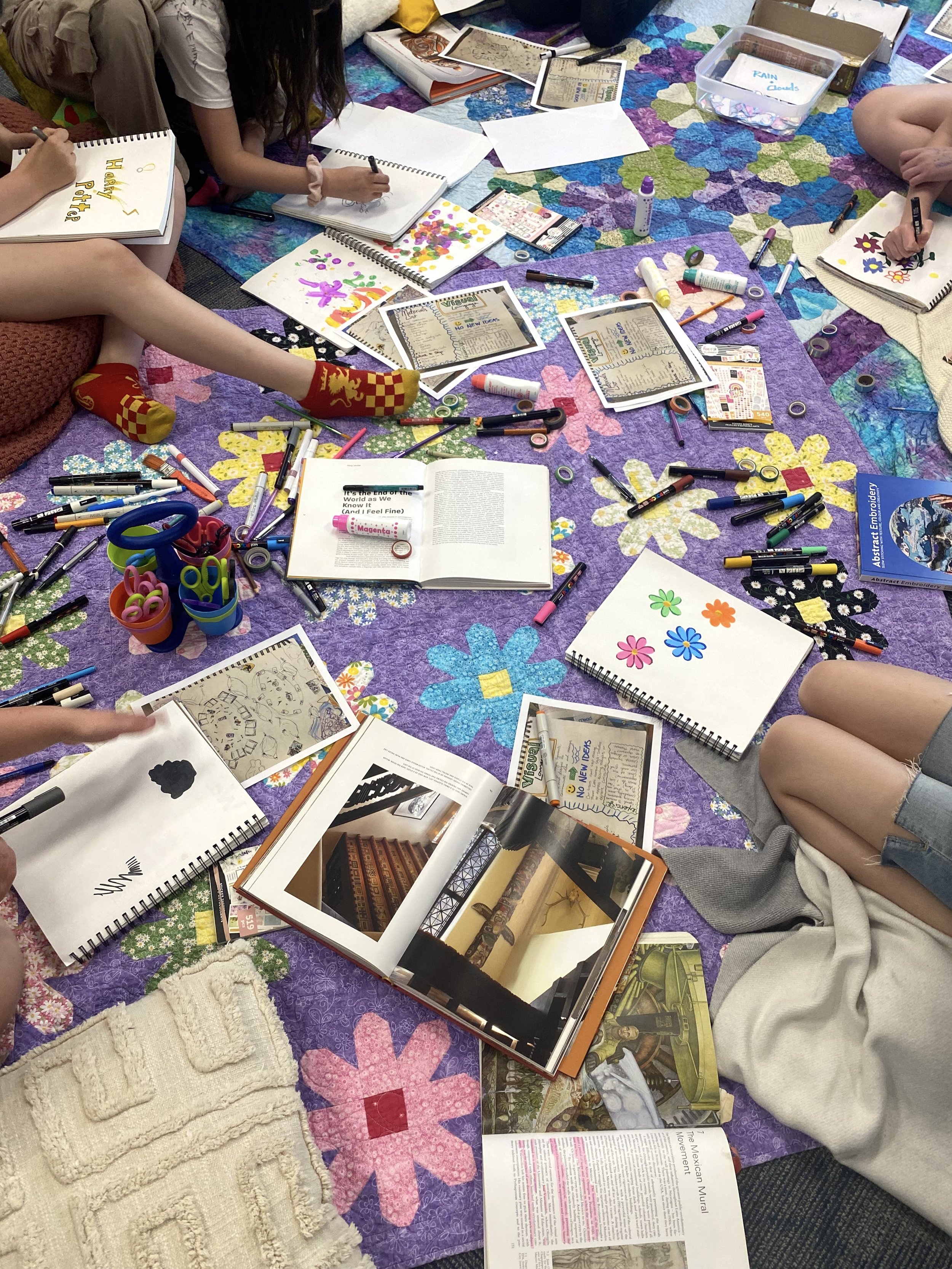
Walk into a Creative Pathways studio session, and you won't find a lecture. You won't find a teacher standing at the front of the room explaining color theory. Instead, you'll find stations like a pile of magazines and scissors, a jar of brushes next to a palette, a collaborative mural taking shape on the wall. Instead of verbal instruction, the materials do the talking.
This isn't a stylistic choice. It's a deliberate teaching method built to solve two real problems that community art spaces run into again and again.
Why Doesn't Creative Pathways Use Verbal Instruction?
Verbal, lecture-style teaching tends to intimidate people who don't already think of themselves as artists. A ten-minute talk on composition or color theory can send participants straight back to the anxious, self-conscious feeling of being back in school. The moment someone starts worrying about getting it "right," they stop creating.
By setting up the room so that materials suggest their own use, Creative Pathways lowers the barrier to entry. A pile of magazines and scissors says cut. A palette and brushes say paint. Nobody has to ask permission or understand a rulebook. They just find a spot and slide in.
How Does Visual Teaching Help Multilingual Groups?
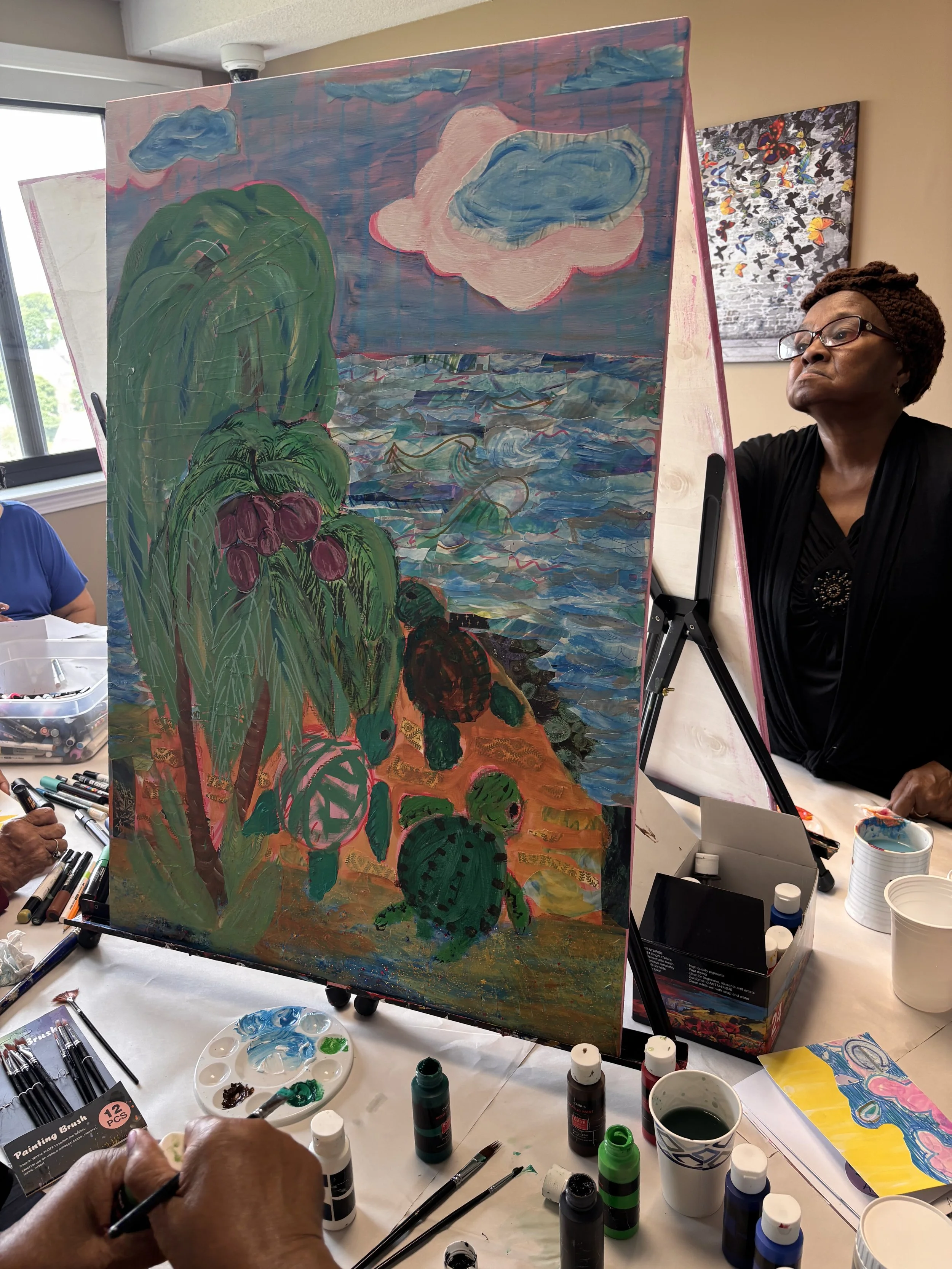
Creative Pathways works with participants who speak many different languages, while the founder speaks only English. Rather than treating this as a barrier, the studio treats it as a creative constraint…one that shapes the entire teaching method.
Instead of relying on shared vocabulary, the studio relies on shared action. This is the foundation of what's known internally as the "Imperfect Demo." When the founder gestures toward a shape and glues down a piece of paper without explaining "compositional balance," the instruction becomes universal. A grandmother who speaks only Cape Verdean Creole has the same access to the process as the English-speaking teenager working beside her. The materials, not the words, become the common language.
What Is the "Imperfect Demo"?
Short answer: The Imperfect Demo is a technique where the teacher models a task quickly and loosely, without aiming for a polished result, to show participants that mistakes are part of the process, not something to avoid.
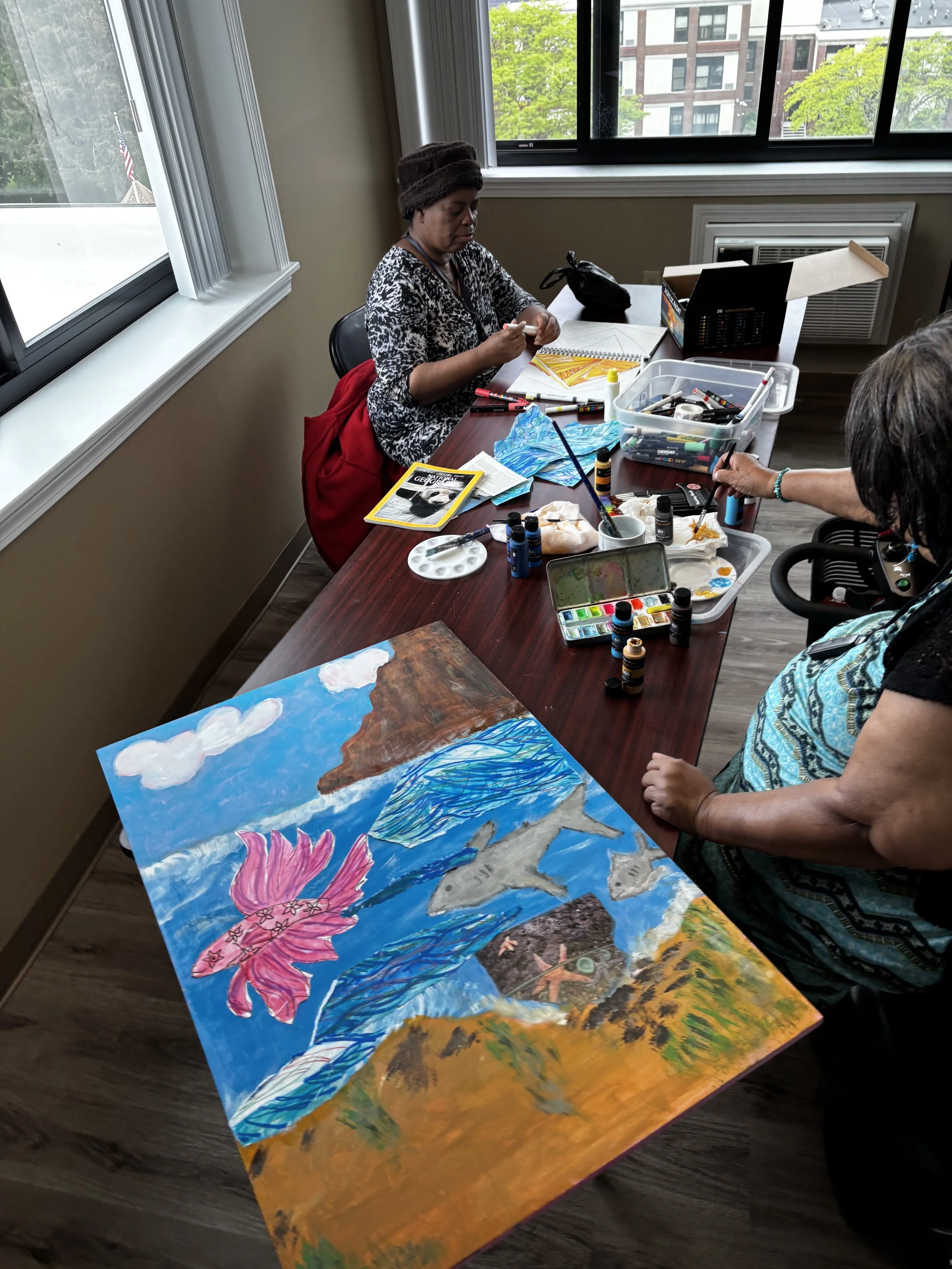
New participants are often shocked by the amount of creative freedom they're given. Their first instinct is usually to ask, "Is this okay?" To break that paralysis, the founder demonstrates a technique badly and quickly on purpose. During one recent project, that meant grabbing a piece of collage paper and gluing it into a blocked-out ocean shape without any careful placement. This was showing, rather than telling, participants that the goal is to fill the space, not to get it perfect on the first try.
Moving fast and skipping the fuss sends a clear signal: you cannot mess this up.
What Is "The Menu of Options"?
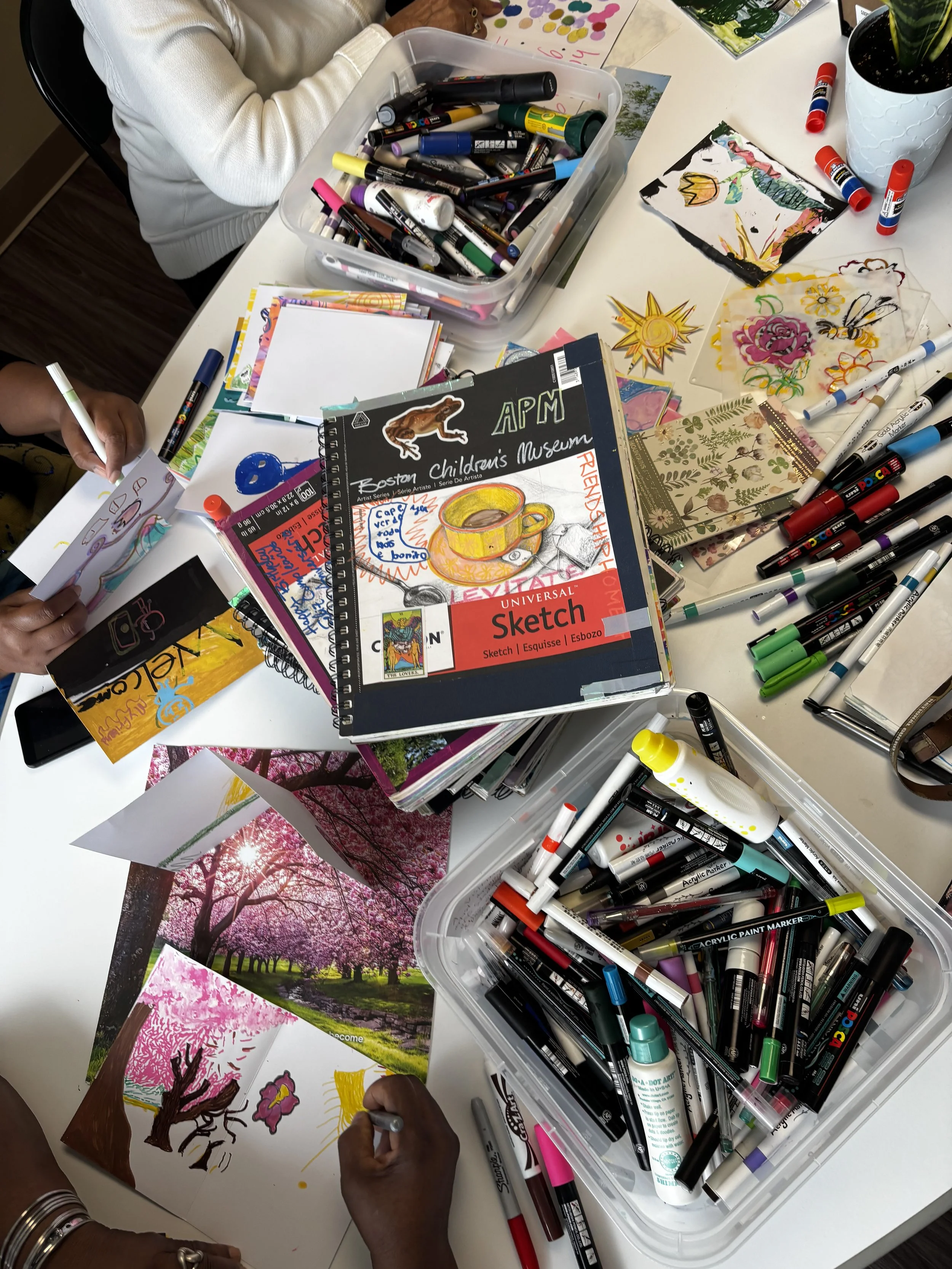
Rather than funneling every participant toward one central project, Creative Pathways runs multiple stations simultaneously. This is a method internally called the Menu of Options. These typically include:
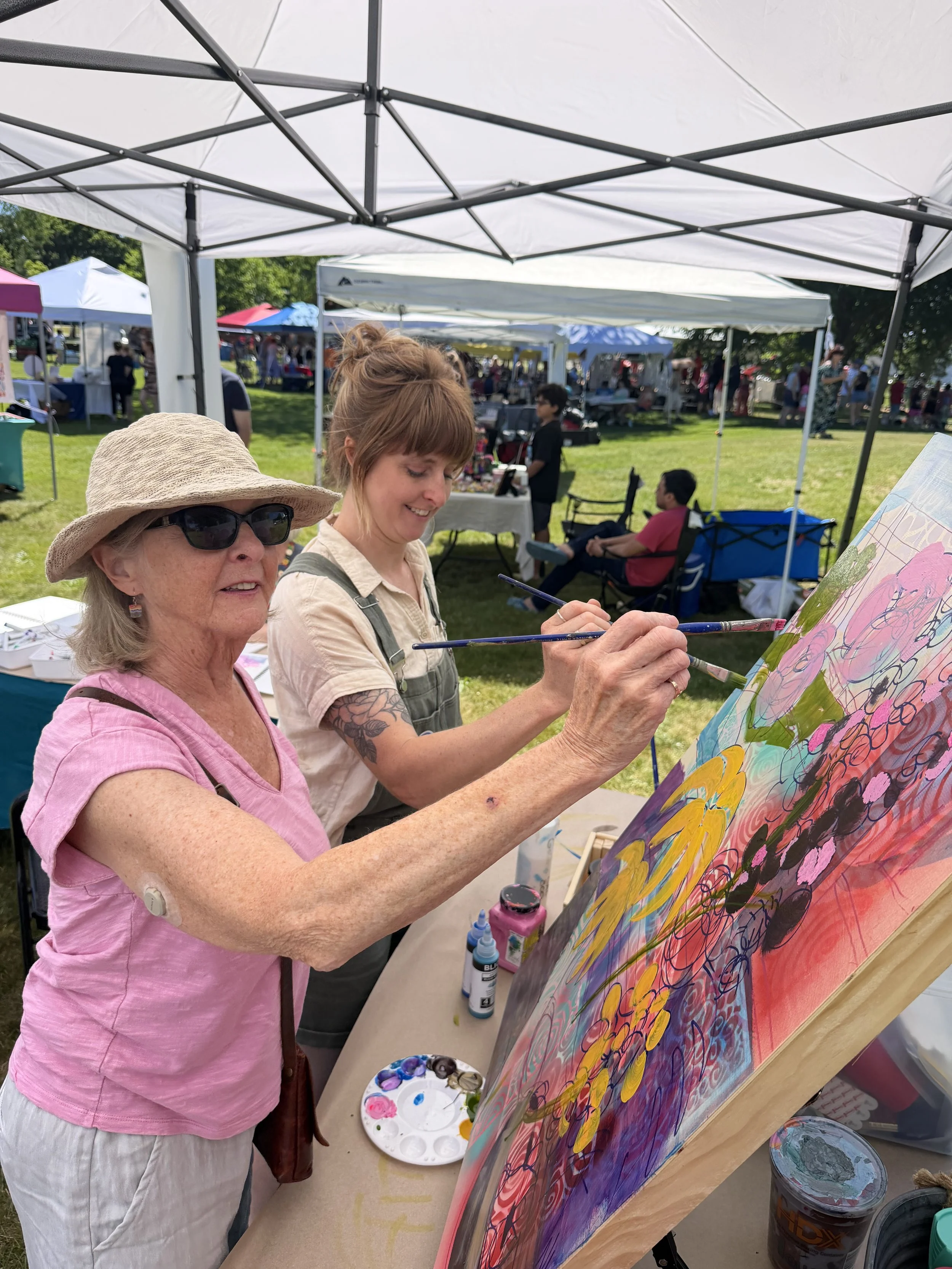
The Main Composition - the large-scale collaborative piece the group builds together
The Harvest Station - magazines and scissors for hunting colors and textures
Texture Generation - calligraphy papers marked up to later be cut into collage material
The Sketchbook Project - a space to browse or sketch ideas
The Palette Cleanser - a low-pressure activity, like a simple still-life demo, for when the group needs a mental break
Nothing goes to waste. Even a small individual piece can eventually be cut up and folded into the larger collaborative work if it stays in the studio long enough.
Why Does Layered Art-Making Matter?
Working in layers gives participants permission to experiment, because no single mark is final. The studio's guiding phrase, "if we don't like it, we can paint it out or cover it later,” takes the pressure off. Nobody knows what will stay or go until the next layer goes on, which means no one is making a final stroke. They're contributing to the ongoing history of the piece.
How Does Creative Pathways Build Participant Trust?
Trust doesn't happen instantly. For the first few weeks of any project, the founder repeats one phrase constantly: "Yes, it is beautiful." No matter what a participant creates, it's validated. Over time, participants stop seeking permission and start trusting their own instincts, and that's when, as the founder puts it, the real work begins.
Creative Pathways builds community through collaborative, visual, and language-inclusive art-making. Want to bring this teaching method to your organization or classroom? Get in touch to learn more.
